Table Of Content
AEDIT uses only high-quality sources, including peer-reviewed studies, to support the facts within our articles. Read our editorial process to learn more about how we fact-check and keep our content accurate, reliable, and trustworthy. By Lindsay CurtisCurtis is a writer with over 20 years of experience focused on mental health, sexual health, cancer care, and spinal health. While seeking lower-cost alternatives may be tempting, choose a reputable provider with specialized training to ensure your safety and achieve the best possible results.
Is it effective?

A suitable candidate is a person who is in the early stages of their hair loss and still has active hair follicles. I still have a month or so to go for the full effects, but so far, my hair is looking good — and much fuller. So while the treatment is an investment, if you're struggling with hair loss, it can certainly be a worthy one. I decided to give the treatment a try to see if it would help me in my hair-growth process.
Step-by-Step What Happens During PRP Therapy
Research also suggests that PRP injections can help treat androgenic alopecia (male pattern baldness). The doctor’s recommendations for how often a person should have PRP will vary depending on a person’s condition and the results of their initial treatment. The doctor may suggest having maintenance injections every 3–6 months once hair loss is under control. The analysis ultimately focused on 11 research papers that included a total of 262 participants with androgenetic alopecia. According to the authors, most of the studies found that injections of PRP reduced hair loss and increased the diameter of hairs and the density of hair growth.

PRP therapy process
Several studies exploring the effects of PRP on hair loss found it is a safe, effective way to promote hair growth. As a treatment for hair loss, injecting the scalp with PRP provides the hair follicles with a boost of healing factors. The injection triggers the scalp to activate hair growth as it improves blood flow to your hair follicles, receiving better oxygen and nutrients. It also promotes cell growth, increases your stem cell, and boosts collagen production, which keeps your hair strands intact with your hair follicles. Doctors typically use this treatment when hair loss results from androgenetic alopecia, a common condition that causes hair follicles to shrink.
How Many PRP Sessions Before Hair Regrows?
This makes PRP potentially usable on its own for the treatment of tendon injuries and osteoarthritis. Researchers theorized that if they could extract concentrated platelets and inject them into damaged areas of the body, they could accelerate healing. To understand how PRP works, it is important to be aware of the role that platelets play in healing. After noticing her hair growing slower and thinning out, one writer decided to try an at-home topical product for restoration.
While it’s common to experience hair shedding following your PRP hair treatment, it’s still advised to consult your dermatologist. They can check the condition of your scalp with a hair check trichometer to observe your hair mass index (HMI) and ensure it’s on the right track. Some patients worrying about the sudden hair loss find significant improvements in their HMI brought by the treatment.
PRP is a type of regenerative medicine that makes use of platelets – small cell fragments found in your blood that contain growth factors. These growth factors can trigger cell reproduction and stimulate tissue healing or regeneration in the treated area. Platelet-rich plasma (PRP) continues to grow in popularity as a hair loss treatment. It’s no surprise, as research continues to show promising results for PRP and its role as a treatment for different types of alopecia. According to one review, 84% of research shows a positive effect of PRP as a treatment for hair loss [1].
PRP With Single Spin and Low Centrifuge Speed Successful for FPHL - Dermatology Advisor
PRP With Single Spin and Low Centrifuge Speed Successful for FPHL.
Posted: Fri, 04 Feb 2022 08:00:00 GMT [source]
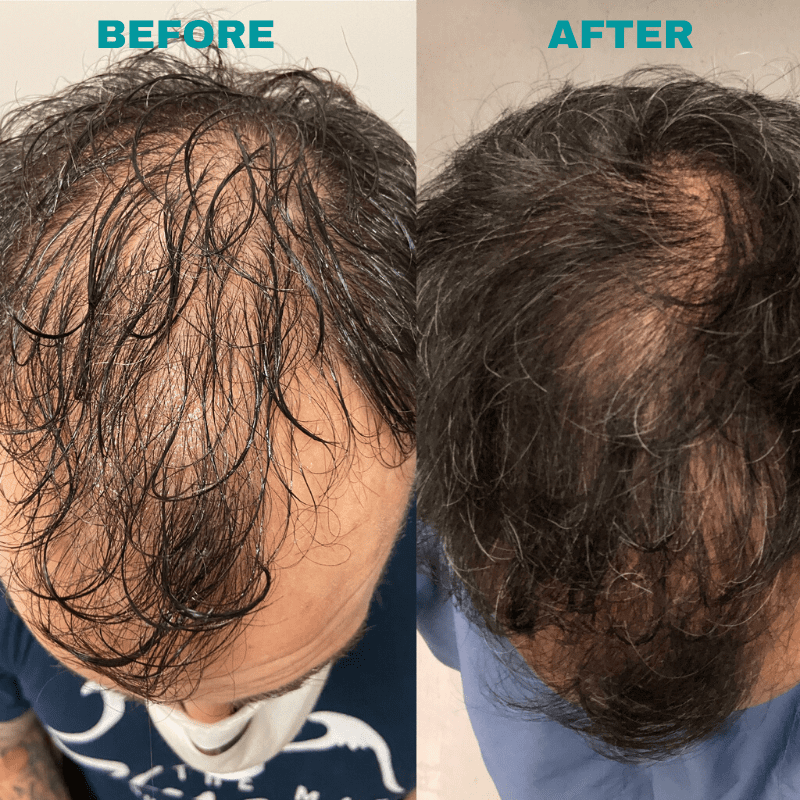
Before & After Images by Provider
Both men and women suffering from hereditary hair loss or other forms of alopecia, except alopecia areata, may receive PRP injections. Some patients aren’t qualified for undergoing PRP hair treatment because it might exacerbate their current condition, or the injections wouldn’t work well on them. This is usually because of their lifestyle, where a patient must not be a chain smoker. Patients who are also on blood-thinning medication and those with a history of medical conditions wouldn’t benefit from plasma injections.
PRP for androgenetic alopecia
While the exact price can vary depending on where you are in the country and where you go, the procedure will run about $1,050 per session at The Things We Do. First, blood is drawn from the patient and is placed in a centrifuge, which is a machine that spins the blood to separate it into its different components—red blood cells and plasma. Here’s an example of a person who saw successful results from PRP injection treatments for hair loss. PRP is a substance drawn from your blood and injected into your scalp that can purportedly help heal bodily tissues, including follicles from which your hairs grow. Platelets are a component of blood, along with red and white blood cells.
Most people feel pressure during the treatment, with minimal to no pain. In contrast to hair transplants, low level lasers, medications like Rogaine, Propecia, and DHT inhibitors, a PRP treatment option is noninvasive with few side effects. This hair loss treatment is not FDA approved and PRP injections are not a hair replacement hair loss solution. As the PRP is injected into the treatment areas on the scalp, some of the hair follicles undergo their anagen phase. This requires the hair bulbs to push out the old hair strand and make way for a new one that’s thicker and healthier. To avoid this, seek a reliable aesthetic clinic or dermatologist who can diagnose the type of hair loss you have and define its causes.
Keep reading to learn more about how PRFM injections work and check out my before-and-after photos. I had tried supplements with slow results and flirted with various hair extensions but wanted something more impactful, long-term, and science-backed. That's when the idea of getting PRP injections for hair loss came into play. Dr. Bauman says he has learned that adding extracellular matrix to PRP injections tends to enhance PRP results, including duration of the hair growth results. Dr. Engelman says that there are minimal side effects and very little downtime post-PRP hair treatment.
People with autoimmune conditions are not good candidates for PRP therapy, as the injections may trigger an overactive immune response that can lead to swollen lymph nodes, fever, or joint pain. Medical professionals collect PRP by extracting blood from our bodies and placing the sample in a centrifuge machine. This machine runs at rapid speeds and separates different components in the blood, platelets being one of them. To have someone in complete disbelief that I was experiencing hair loss, was such a huge turn of events. The PRP is injected into all of the areas of the scalp that are being treated.
She then used a super-fine needle to inject the gel matrix into my scalp. The entire process was about 20 minutes tops and only mildly uncomfortable. I'd put it somewhere between getting a stick-and-poke tattoo or forehead Botox. Gedjeyan actually handed me a vibrator (like, an actual vibrator) to hold onto my forehead as a distraction from any pain. But much of the research has been conducted on small study groups of 40 people or fewer.
One of the most popular current uses is in the treatment of hair loss in both men and women. While not all patients with male or female pattern hair loss respond to it, there have seen some very exciting results. What seems to be most effective is combining PRP treatments with medicines, such as finasteride and minoxidil. Shadi Kourosh, M.D., MPH, Assistant Professor at Harvard Medical School and Board-Certified Dermatologist at the Sadick Dermatology Group. The ideal candidate for a PRP injections for hair loss treatment has early stages of hair loss, and is seeking a minimally invasive procedure.




No comments:
Post a Comment